Home › Services › Rock breaking
Rock Breaking in Auckland
Basalt under a Mount Eden villa, a boulder in a pool dig, an old slab in the way. Hydraulic breakers on diggers sized for the site.
- Basalt, scoria and reinforced concrete broken out
- Breakers for machines from 1.7 to 20 tonne
- Noise, vibration and neighbours managed
Get a free quote
Tell us about the job. We reply within one working day.
Auckland sits on a volcanic field of about fifty vents, and the lava they left behind is basalt: dense, dark, and far too hard for a digger bucket. It lies under much of the central isthmus, Māngere, parts of East Tāmaki, and around Takapuna and Devonport, sometimes with only a spade's depth of soil over it.
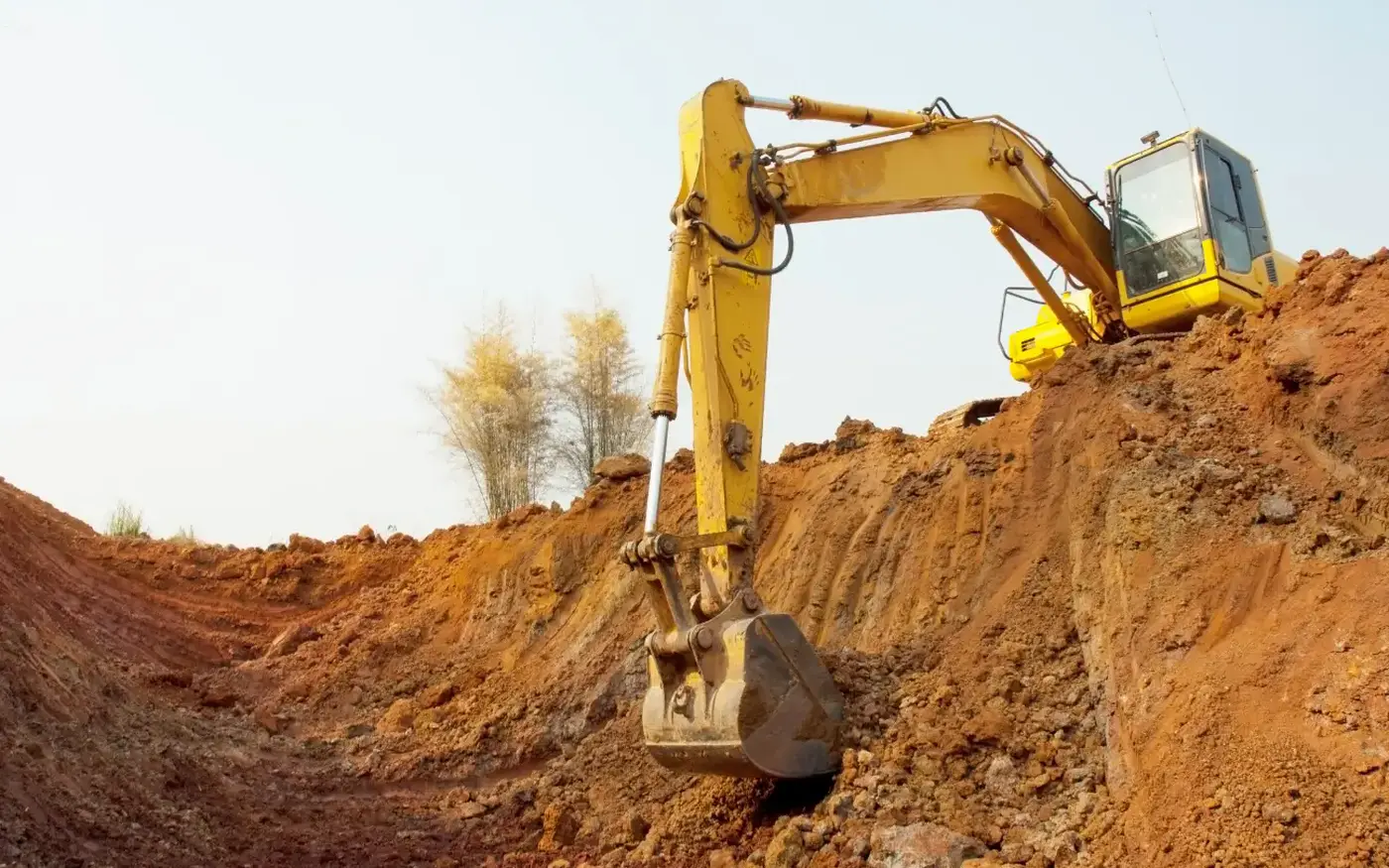
When a dig meets basalt, a hydraulic breaker goes on the excavator in place of the bucket. It hammers the rock into pieces that can be dug out, and the job carries on.
Where rock turns up
- Foundations and basements on the isthmus: Mount Eden, Epsom, Three Kings, One Tree Hill, Onehunga, Ellerslie, Penrose.
- Pools and tanks, where the full depth has to be reached.
- Service trenches, which need a set depth whatever is in the way.
- Driveways being lowered or widened through a lava outcrop.
- Old concrete: slabs, footings and driveways are broken with the same gear. See demolition.
Not all volcanic ground is hard. Scoria and tuff dig easily. Solid lava flows and large floaters are what need the breaker.
Why rock is priced by the hour
Nobody can see how much rock is in the ground until it is opened up. A geotechnical report or a few test pits gives a much better idea, and on volcanic sites they are worth doing before the quote. Even then, rock is normally priced as an hourly rate for the breaker with a stated allowance, and the allowance is adjusted to what is found. Breaking is slow: a few cubic metres an hour in solid basalt with a mid-sized machine, and less with a mini digger in a tight space. The broken rock is heavy to cart but is often wanted for gabions, rock walls and drainage.
Noise, vibration and lava caves
Breakers are loud and the vibration carries through rock to neighbouring houses. Work hours follow the Unitary Plan's construction noise limits, neighbours are told in advance, and near old buildings a condition survey beforehand is sensible. Lava caves and voids are occasionally broken into on the isthmus. Some are protected natural features, so work stops and the council is asked what to do. Volcanic cones and some lava features are outstanding natural features under the Unitary Plan, with tight limits on earthworks. Check the overlays on GeoMaps and confirm with Auckland Council.
Rock breaking prices in Auckland
| Item | Guide price |
|---|---|
| Digger with rock breaker and operator | $180 to $280 per hour |
| Cart away and tip, per m³ | $45 to $110 |
| Break out and remove concrete | $40 to $90 per m² |
| Geotechnical report | $2,500 to $5,000 |
| Machine transport to site and back | $300 to $800 |
Guide prices before GST on a site with reasonable access. The written quote that follows a site visit is the price that counts.
Questions about rock breaking
How much does rock breaking cost in Auckland?
As a guide, $180 to $280 an hour for a digger with a hydraulic breaker and operator. The total depends on how much rock there is, which is why quotes carry an hourly allowance that is adjusted to what is found.
How do I know if my section has rock?
Auckland Council GeoMaps and published geology maps show the lava flows. Neighbours' experience, rock outcrops in gardens and old stone walls are good clues. Test pits or a geotechnical report confirm it.
Is blasting ever used?
Not on residential sites. Hydraulic breakers, and occasionally rock saws or expanding grout where vibration must be kept very low, do the work.
Can the broken rock be reused?
Yes. Basalt is good for rock walls, gabion fill, drainage and hardfill under driveways, which saves on cartage.
Who actually does the work?
An independent Auckland earthworks contractor that we partner with. They come to the site, price the job in writing and carry it out under their own name.
From enquiry to finished job.
Tell us about the job
Send the form or call. What needs digging, a rough size and a suburb is enough to start.
Site visit
The contractor checks access, slope, the ground, underground services and where the spoil can go.
Written, itemised quote
Machine time, cartage, tip fees, imported metal and any consent costs listed separately, with a start date. No obligation.
Dig, cart and tidy up
Sediment controls go in first. The site is left trimmed, compacted and clean, and you walk it before the last invoice.
Get a price on rock breaking
Send the form and we will line up a free site visit. You then get a written quote with every cost listed. Or ring and talk it through.
Request a free quote
Tell us about the job. We reply within one working day.