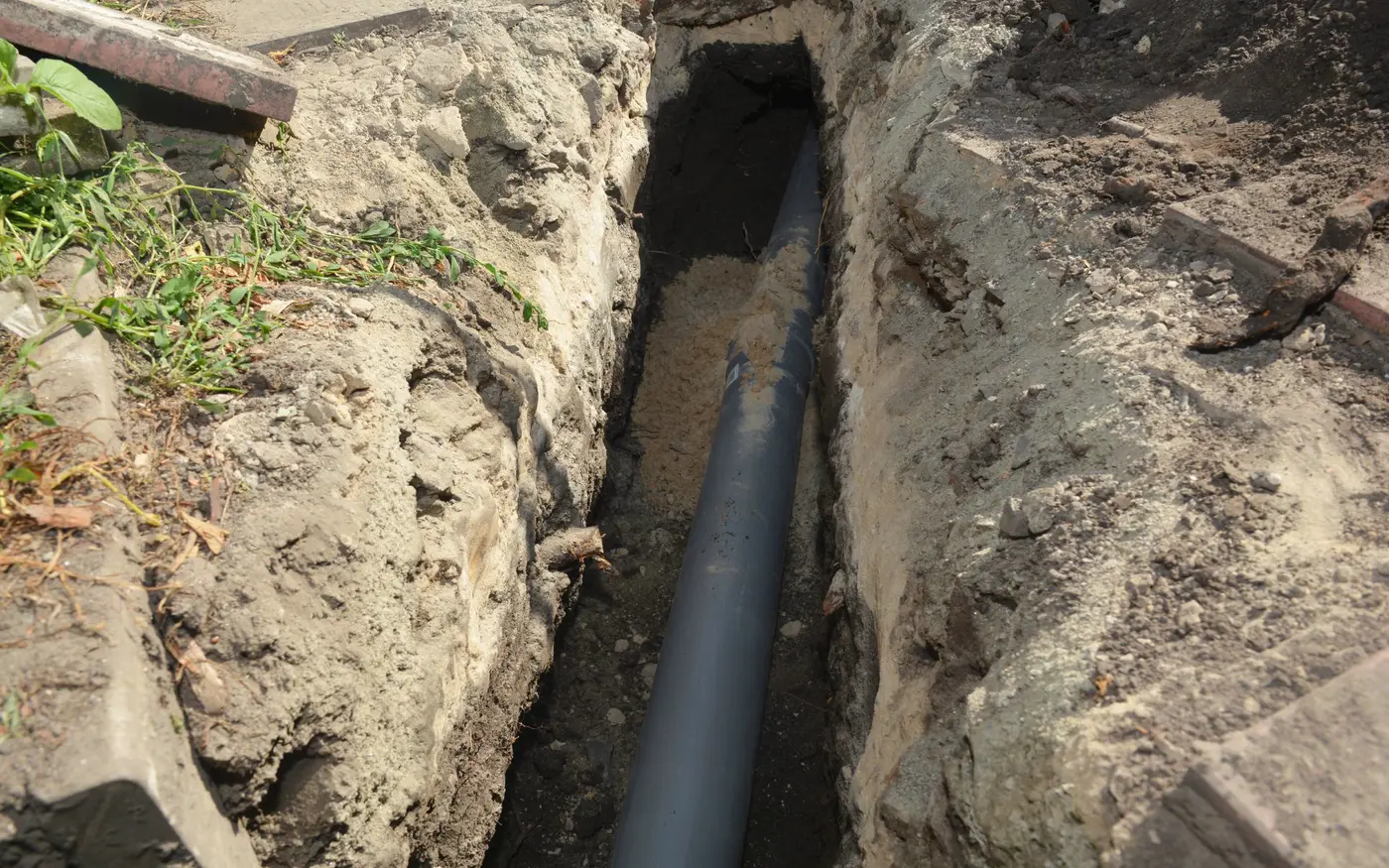
Trenching Services in Auckland
Trenches for stormwater and sewer drains, power and water mains, fibre and irrigation, dug to depth and fall, then backfilled properly.
- Trenches from 200 mm wide, to any depth needed
- Existing services located before digging
- Backfilled in layers so the ground does not sink
Get a free quote
Tell us about the job. We reply within one working day.
A trench looks like the simplest job a digger does. It is also where most underground strikes happen and where most sunken lawns and cracked driveways begin, because a trench that is backfilled in one go will settle for years.
The contractor digs the trench and reinstates the ground. The pipe or cable inside it is laid by the trade licensed for it: a registered drainlayer for sewer and stormwater, an electrician or the lines company for power, a plumber for water.
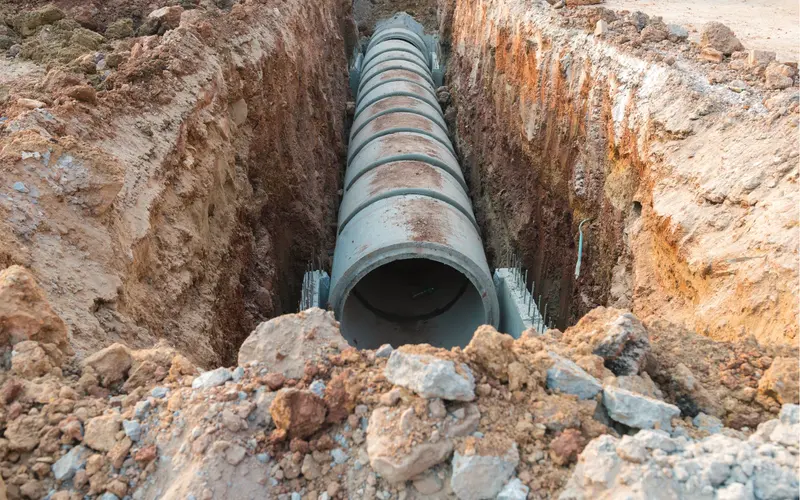
What trenches are dug for
- Drainage. Stormwater and wastewater drains laid to a steady fall, and subsoil drains for wet sections and behind walls.
- Power and gas. Mains to a new house, a minor dwelling, a garage or an EV charger, at the cover depth the network requires.
- Water. New supply pipes from the meter, and replacements for leaking old lines.
- Fibre and data. Ducts to rear sections and outbuildings.
- Footings. See foundation excavation.
Doing it safely
- A beforeUdig request is lodged and the marked services are found by hand or by hydro excavation before the bucket goes near them.
- Trenches deeper than 1.5 metres are shored, benched or battered. Nobody works in an unsupported deep trench.
- Spoil is kept back from the edge and off the road.
- Open trenches are fenced or covered overnight.
Backfill is half the job
Pipes are bedded in sand or fine metal so stones do not point-load them. The trench is then filled in layers of 200 to 300 mm, each one compacted. Under a driveway or path the backfill is hardfill, not the clay that came out. Marker tape goes in above power and gas. A trench across a lawn is topsoiled and left slightly proud to allow for the last bit of settlement. In clay, the spoil that comes out never all fits back in once a pipe and bedding are in the trench, so allow for a small amount to be spread or carted away. Where a trench runs through a vehicle crossing or berm, Auckland Transport's reinstatement rules apply.
Trenching prices in Auckland
| Item | Guide price |
|---|---|
| Trench, dug and backfilled | $25 to $70 per metre |
| Subsoil drain, installed | $90 to $200 per metre |
| Mini digger with operator | $95 to $130 per hour |
| Hydro excavation truck | $250 to $400 per hour |
Guide prices for trenches to about 900 mm deep in soil. Rock, deeper trenches and trenches under concrete cost more.
Questions about trenching
How much does trenching cost per metre?
As a guide, $25 to $70 per metre dug and backfilled, for a trench up to about 900 mm deep in soil. Rock, depth, tree roots and tight access push it up. A subsoil drain with coil, filter cloth and drainage metal is $90 to $200 per metre installed.
How deep does a trench need to be?
It depends what is going in it. Power, gas, water and drains each have their own minimum cover, set by the network owner or the building code. The trade laying the service will confirm the depth.
Can you trench under a driveway or path?
Yes. Concrete is cut and reinstated, or the service is thrust under it where a trench would do too much damage.
What about pipes and cables in the ground?
A beforeUdig request is lodged for the plans of power, gas, water and fibre before any digging. The marked services are then located on site and exposed carefully, because plans are often out by a metre or more.
Who actually does the work?
An independent Auckland earthworks contractor that we partner with. They come to the site, price the job in writing and carry it out under their own name.
From enquiry to finished job.
Tell us about the job
Send the form or call. What needs digging, a rough size and a suburb is enough to start.
Site visit
The contractor checks access, slope, the ground, underground services and where the spoil can go.
Written, itemised quote
Machine time, cartage, tip fees, imported metal and any consent costs listed separately, with a start date. No obligation.
Dig, cart and tidy up
Sediment controls go in first. The site is left trimmed, compacted and clean, and you walk it before the last invoice.
Get a price on trenching
Send the form and we will line up a free site visit. You then get a written quote with every cost listed. Or ring and talk it through.
Request a free quote
Tell us about the job. We reply within one working day.