Home › Services › Residential earthworks
Residential Earthworks in Auckland
Site scrapes, cut and fill and building platforms for new houses, minor dwellings, extensions and garages, with the spoil, the compaction and the sediment controls priced in.
- Site scrapes, cut and fill and building platforms
- Fill placed in layers, compacted and tested
- Sediment controls set up before the first cut
Get a free quote
Tell us about the job. We reply within one working day.
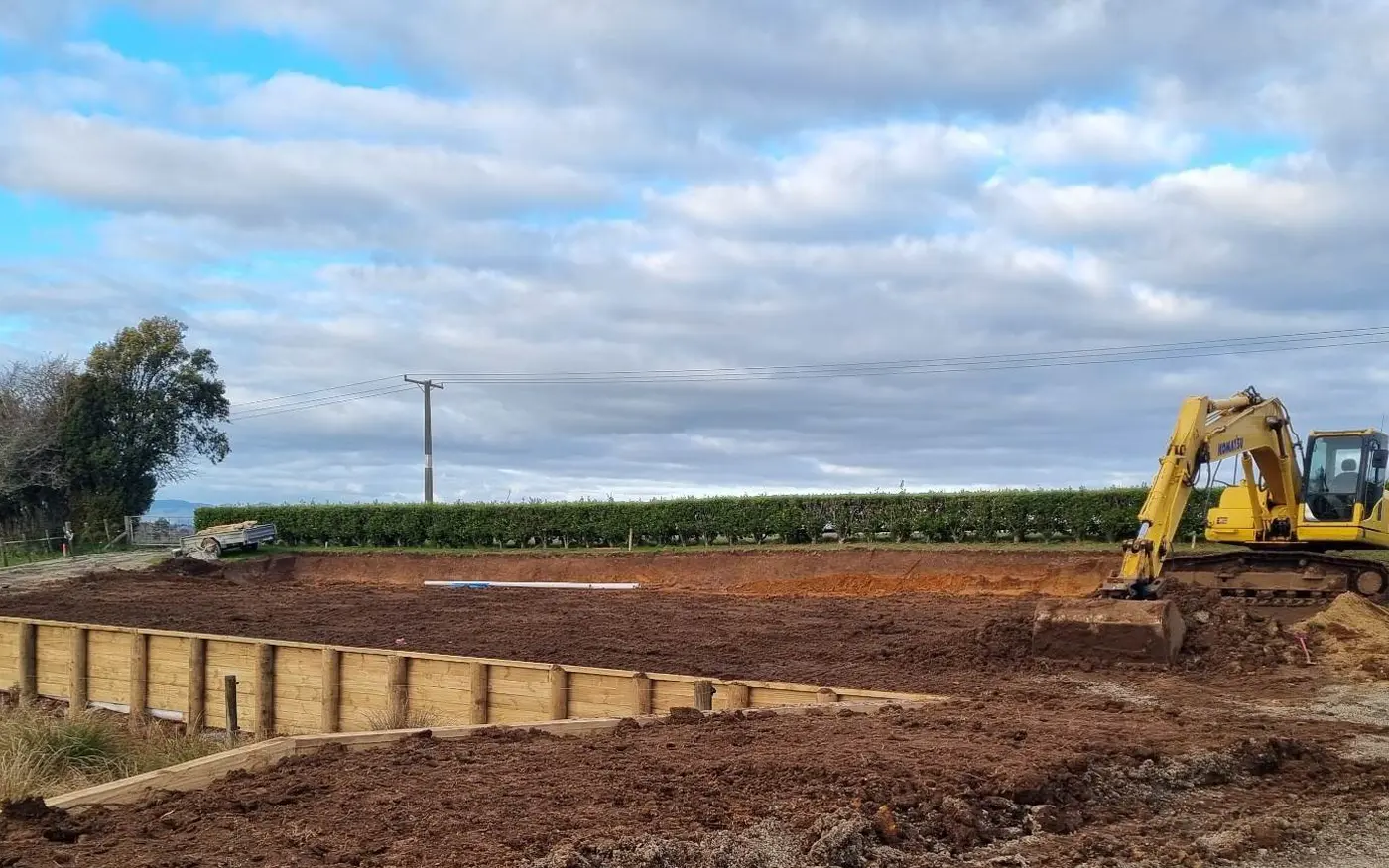
Residential earthworks is the stage between a bare section and a builder starting on the foundations. The topsoil comes off, high ground is cut down, low ground is built up, and what is left is a firm, level platform at the height the plans call for, with somewhere for the rainwater to go.
On Auckland clay the order of work matters as much as the digging. Clay that is cut and left open through a wet week turns to slurry, and fill that is tipped rather than compacted will settle under a house for years. A good earthworks job is planned around the weather, the truck movements and the testing.
What the work covers
- Site scrape. Grass, roots and topsoil are stripped from the building footprint and stockpiled or carted away. See the site scrape and platform guide.
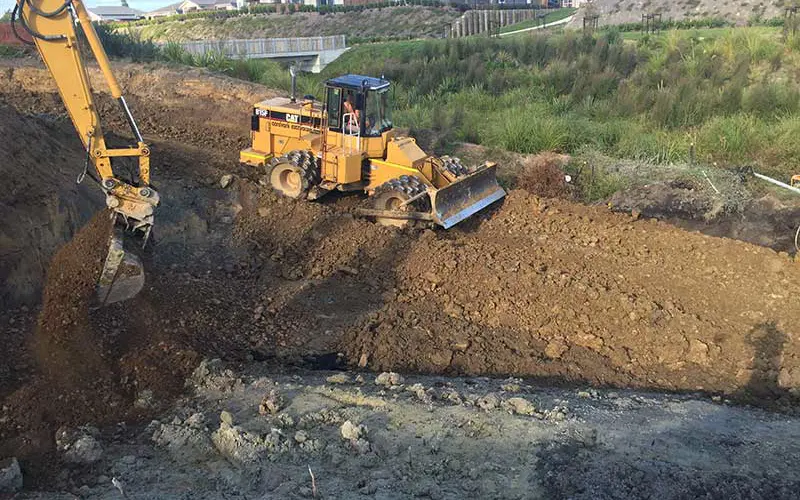
- Cut and fill. The high side is cut and the soil is placed on the low side in thin layers, each one compacted. The cut and fill guide explains how the volumes are balanced.
- Building platform. The pad is trimmed to level, usually a metre or so wider than the house all round, and finished with hardfill where the foundation design asks for it.
- Driveway and service runs. The driveway digout and trenches for drains and power are best done while the machine is on site.
- Smaller pads. Level bases for garages, sleepouts, sheds and water tanks, a tank pad being $1,500 to $4,500 on most sites.
Fill that can carry a house
Fill under a building is structural. It is placed in layers of about 150 to 200 mm, compacted with a roller or plate, and tested by a geotechnical engineer or technician as it goes up. The engineer then certifies the platform, and the council wants that certificate before the foundations are signed off. Topsoil, peat, wet clay and anything with roots or rubbish in it cannot be used as structural fill and has to leave the site or go under lawn.
Compaction testing is $400 to $1,200 a visit, and a geotechnical report at design stage is $2,500 to $5,000. Both are small against the cost of a slab that cracks.
Consent, season and sediment
Earthworks for a new house are normally covered by the building consent, and larger volumes or sloping, flood-prone or overlay sites can also need a resource consent. Consented bulk earthworks in Auckland are generally limited to 1 October to 30 April unless the council approves winter work. Every site needs erosion and sediment controls from day one. Read earthworks consent in Auckland and erosion and sediment control before settling on a start date.
Residential earthworks prices in Auckland
| Item | Guide price |
|---|---|
| Site scrape for a new house | $2,500 to $7,000 |
| Building platform, near-level section | $8,000 to $30,000 |
| Cut-and-fill platform, sloping section | $25,000 to $80,000 |
| Cut and fill on the same site | $20 to $45 per m³ |
| Cart away and tip clean fill | $45 to $110 per m³ |
| Imported hardfill, placed and compacted | $90 to $160 per m³ |
Guide prices before GST on a site with reasonable access. The written quote that follows a site visit is the price that counts.
Questions about residential earthworks
How much does a building platform cost in Auckland?
As a guide, $8,000 to $30,000 on a near-level section and $25,000 to $80,000 where a sloping section has to be cut and filled. Retaining walls, drainage and consent fees are separate. The biggest swing is whether the soil can stay on site or has to be trucked away.
Can the soil that is dug out be used as fill?
Often, if it is clean clay at the right moisture. It has to be placed in thin layers and compacted, not pushed over the edge. Topsoil, peat and saturated clay are not suitable under a building.
Can earthworks be done in winter?
Small jobs can, with care. Larger consented earthworks are generally limited to October through April in Auckland, and clay is slow and messy to work when wet. If you can choose, book the bulk of the digging for the dry months.
Does it need a resource consent?
It depends on the volume and area of earth moved, the slope, the zone and any overlays on the property, such as a flood plain, an overland flow path or protected trees. Many small residential jobs are permitted without one. Check the property on Auckland Council GeoMaps and confirm with the council before work starts.
Who actually does the work?
An independent Auckland earthworks contractor that we partner with. They come to the site, price the job in writing and carry it out under their own name.
From enquiry to finished job.
Tell us about the job
Send the form or call. What needs digging, a rough size and a suburb is enough to start.
Site visit
The contractor checks access, slope, the ground, underground services and where the spoil can go.
Written, itemised quote
Machine time, cartage, tip fees, imported metal and any consent costs listed separately, with a start date. No obligation.
Dig, cart and tidy up
Sediment controls go in first. The site is left trimmed, compacted and clean, and you walk it before the last invoice.
Get a price on residential earthworks
Send the form and we will line up a free site visit. You then get a written quote with every cost listed. Or ring and talk it through.
Request a free quote
Tell us about the job. We reply within one working day.