In short
- A site scrape for a new house is $2,500 to $7,000 as a guide.
- It removes grass, roots and topsoil so the building sits on firm subsoil.
- The platform is then cut or filled to level, usually a metre wider than the house all round.
- Hardfill under a slab is placed in layers, compacted and checked before the pour.
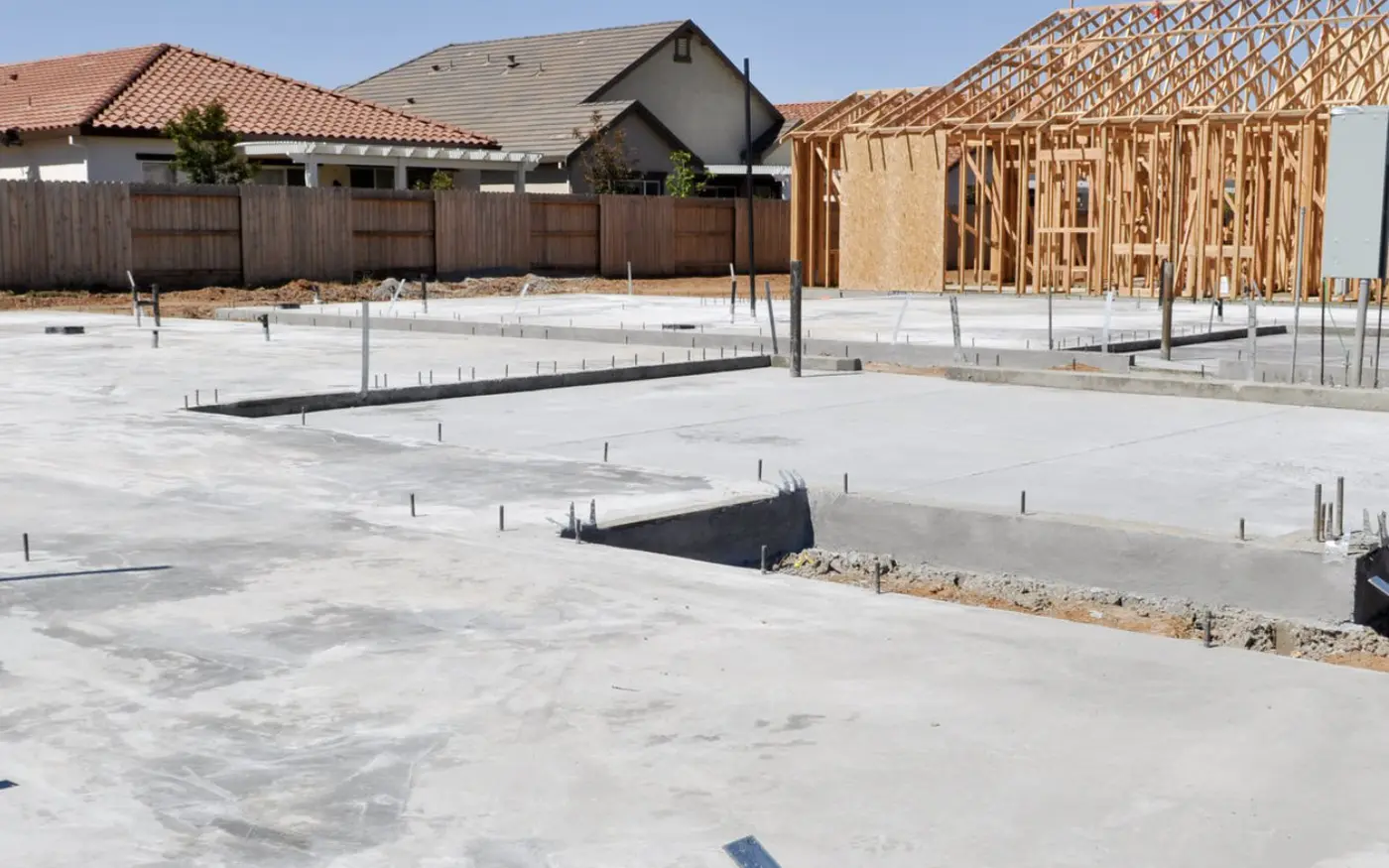
A site scrape is the removal of vegetation and topsoil from the area where a building, driveway or paving will go, leaving clean, firm subsoil. Building platform preparation is everything that follows to turn that scraped ground into a level, compacted pad at the right height for the foundations. A scrape for a typical new house costs $2,500 to $7,000 as a guide.
Why topsoil has to come off
Topsoil is full of organic matter and air. It holds water, compresses under load and rots down over time. The building code's foundation standard, NZS 3604, defines good ground in a way that excludes topsoil, soft clay, peat and uncontrolled fill. So before foundations, slabs or driveways are built, the topsoil layer is stripped. In Auckland it is usually 100 to 300 mm thick, and deeper in old garden beds, gullies and volcanic soils.
What a site scrape includes
- Set-out. The surveyor or builder marks the building footprint and the working area around it.
- Sediment controls. A stabilised entrance and silt fences go in first. See erosion and sediment control.
- Clearing. Shrubs, stumps, old paths and fences are removed. Larger clearing is covered under site clearing.
- Stripping. A digger with a wide bucket peels off the turf and topsoil across the footprint, the driveway line and a working margin.
- Stockpiling. Good topsoil is heaped in a corner for the lawns later. The surplus is carted away.
- Proofing. The exposed subsoil is checked for soft spots, old fill, buried rubbish and drains.
On a flat section this is a one-day job for a mid-size digger and a truck.
Scrape costs
| Item | Guide price |
|---|---|
| Site scrape for a new house | $2,500 to $7,000 |
| Strip and stockpile topsoil | $6 to $15 per m² |
| Cart away and tip surplus topsoil | $45 to $110 per m³ |
| Erosion and sediment controls | $800 to $3,000 |
Guide prices for Auckland before GST, on a site with reasonable access. Only the written quote that follows a site visit is a firm figure.
By area, stripping 300 square metres at $6 to $15 per square metre is $1,800 to $4,500. The total depends mostly on how much topsoil leaves the site. At 200 mm deep, 300 square metres yields 60 cubic metres in the ground, and carting all of it away at $45 to $110 per cubic metre would add $2,700 to $6,600.
From scrape to platform
A building platform is the level area the house is built on. After the scrape, the subsoil is shaped to the design level.
- On a near-level site the platform is trimmed with the digger, high spots cut and low spots filled with compacted hardfill.
- On a sloping site the platform is formed by cut and fill, often with retaining walls, and the fill is engineered and tested.
The platform is made larger than the house, typically by a metre or more on every side, so there is room for boxing, scaffolding and drainage. Its surface is given a slight fall so rain runs off, and its height is set from the floor level on the plans, working down through the slab and the hardfill.
Soft spots and surprises
Proofing the scraped ground is where problems are found cheaply. Common ones in Auckland:
- Soft or wet clay in a hollow. It is dug out to firm ground and replaced with compacted hardfill.
- Old fill from an earlier building, pool or garden. It is removed or assessed by an engineer.
- Buried tree stumps and roots that will rot and leave voids.
- Old drains, septic tanks, wells and soak holes.
- Rock on volcanic sites, which may sit above the design level and need breaking.
The foundation designer or engineer decides what to do with each. A scala penetrometer test, which measures how hard the ground is by counting hammer blows, is the usual check that the subsoil meets the standard.
Hardfill under a slab
A concrete floor slab sits on a layer of compacted granular fill. Typical practice is a well-graded aggregate such as GAP 40 or GAP 65, placed in layers no more than about 150 mm thick, each compacted with a plate compactor or roller, and finished with a thin sand blinding to protect the damp-proof membrane. The plans state the material and thickness. Hardfill placed in one thick layer and compacted only on top stays loose underneath, and the slab settles. Imported hardfill, placed and compacted, is $90 to $160 per cubic metre.
Under pod and raft floors the platform has to be especially flat, because the pods sit directly on it. For pile foundations, the platform matters less for level and more for access: the piling rig or auger needs firm, even ground to work from.
Who does what
| Task | Usually done by |
|---|---|
| Geotechnical report and foundation design | Engineer |
| Set-out and levels | Surveyor or builder |
| Scrape, platform, hardfill and compaction | Earthworks contractor |
| Compaction and ground testing | Engineer or testing technician |
| Footing trenches | Earthworks contractor or foundation crew |
| Pre-pour inspection | Council inspector or engineer |
Timing
Scraped clay should not sit open for long. Rain softens the surface, and the softened layer then has to be removed again before foundations. The best sequence is scrape, platform and hardfill in one visit, with the foundation crew booked to follow within days. If there has to be a gap, a layer of metal over the platform protects it and gives the builder a clean surface to work from.
A platform on a near-level section, including scrape, trimming and hardfill, is $8,000 to $30,000 as a guide. Sloping sections are $25,000 to $80,000. The full service is on the residential earthworks page, and footings are covered under foundation excavation.
Common questions
What is a site scrape?
Stripping the grass, roots and topsoil from the area to be built on, so foundations and slabs sit on firm subsoil. It is normally the first machine job on a new build.
How much does a site scrape cost?
As a guide, $2,500 to $7,000 for a new house site, depending on area, topsoil depth and how much has to be carted away.
How deep is a site scrape?
As deep as the topsoil, which is usually 100 to 300 mm in Auckland. All of it comes off under buildings and driveways.
Can I keep the topsoil?
Yes. Stockpile it on site, cover it, and spread it back over lawn and garden areas at the end of the build.