Home › Services › Pool excavation
Swimming Pool Excavation in Auckland
The hole for a concrete or fibreglass pool, dug to the pool builder's set-out and levels, with 60 to 120 cubic metres of spoil taken off site.
- Dug to the pool builder's set-out and depths
- Back yard access worked out before the quote
- Spoil reused on site or carted away
Get a free quote
Tell us about the job. We reply within one working day.
A pool excavation is a precise hole in an awkward place. The pool usually goes in the back yard, behind the house, and the digger and every truckload of soil have to get past the house to do it.
The contractor digs to the pool company's drawings. The pool company then installs the shell or builds the concrete pool, and the gap around it is backfilled.
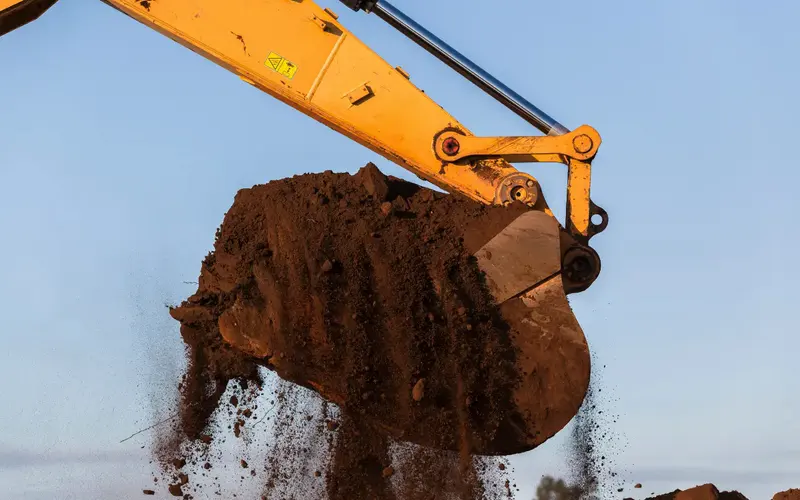
How a pool dig runs
- Set-out. The pool builder marks the outline, the levels and the over-dig, typically 300 to 500 mm wider than the shell.
- Access. A fence panel or gate comes out, mats go down, and the route for the digger and dumpers is cleared.
- Dig. The hole is cut in stages to the shallow and deep-end depths. Sides are battered or stepped in soft ground.
- Base. For a fibreglass pool the floor is trimmed and a bed of compacted metal is screeded to the shell's profile.
- Cartage. Spoil goes out as it is dug.
- Backfill. Once the pool is in, the surround is backfilled with free-draining metal, in step with filling the pool with water.
What moves the price
- Access. An 8 tonne digger loading trucks directly does in one day what a mini digger and tracked barrows do in four. See tight access excavation.
- Volume. A typical 8 by 4 metre pool is 60 to 80 cubic metres in the ground and around 100 on the trucks.
- Ground. Basalt needs rock breaking. Sand and wet ground need shoring or wider batters.
- Groundwater. A high water table can float an empty fibreglass shell, so the pool builder may specify a drain and a hydrostatic valve.
- Slope. Pools on sloping sites need retaining walls or an engineered structure on the low side.
Rules to check first
A residential pool needs a building consent, mainly for the pool barrier, and the pool builder normally handles it. The excavation can need a resource consent on sites with overlays, steep slopes or large volumes. Pools cannot be built over public pipes, and yards and impervious-area limits apply. Check the property on GeoMaps and confirm with Auckland Council. Removing an old pool is covered under demolition.
Pool excavation prices in Auckland
| Item | Guide price |
|---|---|
| Pool excavation, typical job | $6,000 to $20,000 |
| Dig and load, good access | $25 to $60 per m³ |
| Cart away and tip clean fill | $45 to $110 per m³ |
| Dig and remove, tight access | $120 to $300 per m³ |
| Digger with rock breaker | $180 to $280 per hour |
Guide prices before GST on a site with reasonable access. The written quote that follows a site visit is the price that counts.
Questions about pool excavation
How much does pool excavation cost in Auckland?
As a guide, $6,000 to $20,000 for a typical residential pool. The low end is an open site with direct truck access. The high end is a back yard reached only by a mini digger, or a site with rock.
How long does it take to dig a pool?
One to two days with good access. Three to five days through a side path with small machines.
Can the soil stay on site?
If you have room, yes: raising a lawn or building up a bank with the spoil saves a lot of cartage. It needs to be spread and compacted properly, and large fills can need consent.
Does it need a resource consent?
It depends on the volume and area of earth moved, the slope, the zone and any overlays on the property, such as a flood plain, an overland flow path or protected trees. Many small residential jobs are permitted without one. Check the property on Auckland Council GeoMaps and confirm with the council before work starts.
Who actually does the work?
An independent Auckland earthworks contractor that we partner with. They come to the site, price the job in writing and carry it out under their own name.
From enquiry to finished job.
Tell us about the job
Send the form or call. What needs digging, a rough size and a suburb is enough to start.
Site visit
The contractor checks access, slope, the ground, underground services and where the spoil can go.
Written, itemised quote
Machine time, cartage, tip fees, imported metal and any consent costs listed separately, with a start date. No obligation.
Dig, cart and tidy up
Sediment controls go in first. The site is left trimmed, compacted and clean, and you walk it before the last invoice.
Get a price on pool excavation
Send the form and we will line up a free site visit. You then get a written quote with every cost listed. Or ring and talk it through.
Request a free quote
Tell us about the job. We reply within one working day.