In short
- Demolishing a single-storey timber house is $18,000 to $45,000 as a guide, or $120 to $250 per m² of floor.
- Asbestos removal, where it is found, adds $5,000 to $25,000.
- An asbestos survey is required before demolition, and services must be formally disconnected.
- Detached buildings up to three storeys generally need no building consent to demolish, but check overlays.
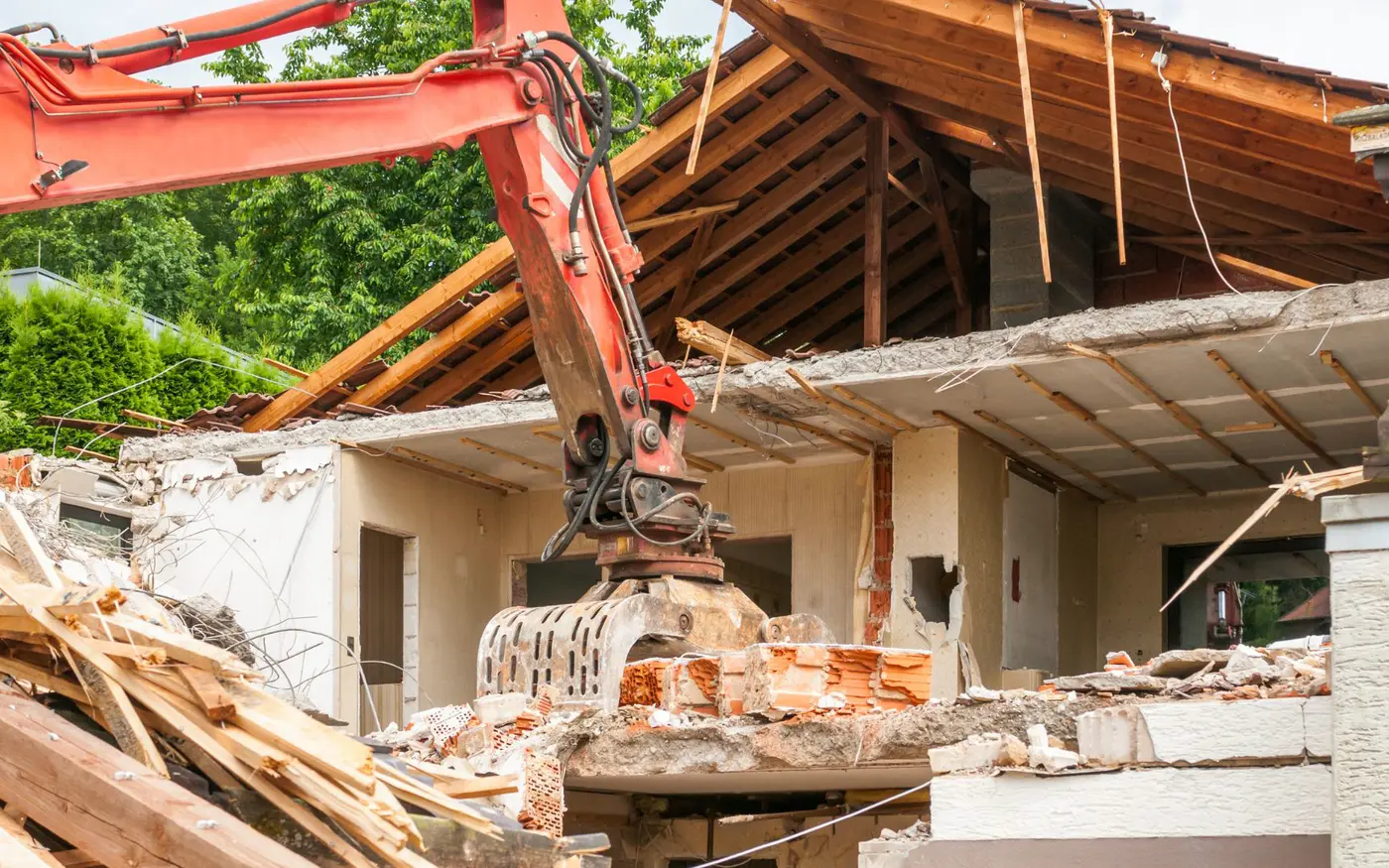
Demolishing a standard single-storey timber house in New Zealand costs $18,000 to $45,000 as a guide, which works out at $120 to $250 per square metre of floor area. A garage or shed is $2,500 to $8,000. Asbestos, brick, concrete floors, a second storey and tight access push the figure up. Salvageable materials and easy truck access bring it down.
Guide prices
| Demolition job | Guide price |
|---|---|
| Single-storey timber house | $18,000 to $45,000 |
| House, per m² of floor area | $120 to $250 |
| Garage, carport or shed | $2,500 to $8,000 |
| Asbestos removal, where found | $5,000 to $25,000 |
| Concrete driveway, path or slab | $40 to $90 per m² |
| Contaminated soil disposal | $180 to $400 per tonne |
Guide prices for Auckland before GST, on a site with reasonable access. Only the written quote that follows a site visit is a firm figure.
A worked example
A 110 square metre weatherboard house on piles, at $120 to $250 per square metre, comes to $13,200 to $27,500. Add a 50 square metre concrete driveway at $40 to $90 per square metre, which is $2,000 to $4,500, and a single garage at $2,500 to $8,000.
Where the money goes
- Waste disposal. Usually the largest single item. Mixed demolition waste is charged by the tonne at landfill, and a house produces 40 to 100 tonnes. Sorting timber, steel and concrete on site reduces it.
- Machine and labour. An excavator with a grapple, an operator, labourers and trucks for three to five days.
- Asbestos. Survey, licensed removal, air monitoring and disposal.
- Services. Disconnection fees to the power, gas and water providers.
- Site controls. Fencing, dust suppression, traffic management and sediment control.
- Foundations. Digging out slabs, footings and piles, then levelling the site.
What makes a house dearer to demolish
- Construction. Brick and concrete block weigh several times what timber does, and all of it is trucked and tipped.
- A concrete floor slab in place of timber piles.
- Height. Two storeys need a larger machine and more care.
- Access. Rear sections, shared driveways and narrow streets mean smaller trucks and more trips.
- Neighbours. A house a metre from the boundary is taken apart, not pushed over.
- Basements, pools and tanks that have to be removed or filled.
Asbestos
Under the Health and Safety at Work (Asbestos) Regulations 2016, asbestos has to be identified before a building is demolished, and removed first so far as is reasonably practicable. In houses built before about 2000 it is commonly found in fibre-cement cladding and soffits, corrugated roofing, textured ceilings, vinyl flooring and its backing, and around old heaters and switchboards. More than 10 square metres of bonded asbestos, or any friable asbestos, must be removed by a licensed removalist. The waste is wrapped, labelled and taken to a facility approved to receive it. Costs depend entirely on how much there is, which is why the survey comes before the quote.
Consent and rules
- Building consent. Schedule 1 of the Building Act exempts the demolition of a detached building that is not more than three storeys. Attached buildings and taller ones need a consent.
- Resource consent. District plans protect heritage buildings and, in some places, older character housing. In Auckland, properties in special character and historic heritage overlays can need a resource consent to demolish.
- Services. Power, gas, water and wastewater connections are formally disconnected or capped by the network providers before work starts. Allow several weeks.
- Health and safety. Some demolition is notifiable to WorkSafe in advance.
Rules vary between councils. Confirm with yours before signing a contract.
Salvage, recycling and relocation
Older houses contain materials people want: rimu and kauri flooring and framing, doors, leadlight windows, bricks and roofing iron. A salvage crew may strip these before the machine arrives, and their value can be credited against the price. Clean concrete is crushed into aggregate, and steel is recycled. If the house is sound, selling it for relocation removes most of the demolition cost altogether, though it needs truck access and takes longer to arrange.
After the house is gone
The quote should say how the site will be left. For a rebuild, that is normally with all foundations, drains and rubbish removed, the ground scraped and roughly levelled, and sediment controls in place. From there the site scrape and building platform can follow directly. Topsoil around old houses often carries lead from paint and fragments of asbestos cement, so it may need testing before it is reused or carted away.
How to reduce the cost
- Get the asbestos survey done early, so quotes are firm.
- Book service disconnections as soon as you have a date.
- Offer the house for relocation or salvage before demolition.
- Combine demolition with the earthworks for the new build, so one contractor and one machine do both.
- Clear out furniture and household rubbish yourself.
Auckland projects are covered on the demolition page.
Common questions
How much does it cost to demolish a house in NZ?
As a guide, $18,000 to $45,000 for a single-storey timber house with no asbestos, or $120 to $250 per square metre of floor area. Asbestos removal adds $5,000 to $25,000 where it is found.
Do I need a building consent to demolish a house?
Generally not, if it is a detached building of no more than three storeys. A resource consent may still be needed if the property is in a heritage or character overlay. Confirm with your council.
How long does house demolition take?
Three to five days on site for a standard house. Allow four to eight weeks beforehand for the asbestos survey, any removal and service disconnections.
Can I demolish a house myself?
An owner can do some work, but asbestos rules, service disconnections, waste disposal and safety obligations still apply. Most owners find a contractor is cheaper once disposal is counted.