In short
- Clay drains very slowly, so water sits on the surface or just below it.
- Fix surface water first: reshape the ground so it falls away from the house.
- Subsoil drains lower groundwater, but only if they have a proper outlet.
- Water cannot be sent onto a neighbour or into the wastewater sewer.
Most of Auckland is built on clay, and clay lets water through extremely slowly. Rain that would soak into sandy or volcanic soil in minutes sits on clay for days. The fix is to manage the water in stages: stop it arriving, shed it from the surface, drain it from the soil, and take it to a lawful outlet.
How to tell what kind of water problem you have
| What you see | Likely cause | Usual fix |
|---|---|---|
| Puddles that linger after rain | Flat or dished surface, compacted clay | Regrade, aerate or rip, topsoil |
| Water running across the section in heavy rain | Runoff from uphill or an overland flow path | Cut-off drain or swale, keep the flow path open |
| Ground soft all winter, even without rain | High groundwater or seepage | Subsoil drains |
| Water under the house | Ground sloping toward the house, blocked vents, leaking pipes | Regrade, subsoil drain, fix leaks |
| One wet patch that appeared suddenly | Broken water or drain pipe | Find and repair the pipe |
| Wet strip at the base of a bank or wall | Seepage from the cut | Drain at the toe, wall drainage |
Watch the section during a downpour and again a day later. Where water comes from and where it stops tells you more than any amount of digging.
Step one: surface shape
The cheapest drainage is a slope. Ground should fall away from the house, at about 1 in 20 for the first metre or two where there is room, and lawns should have a steady fall of at least 1 in 100 toward a low point with an outlet. Many wet lawns are simply dished, often from fill that has settled or from machines during the build. A small digger can strip the topsoil, reshape the clay beneath, and put the topsoil back in a day or two. Paths and patios that trap water against the house are lowered or given a channel.
Step two: stop water arriving
If the section sits below a hill, a road or the neighbour's driveway, deal with that water at the boundary. A cut-off drain is a trench across the top of the site with a pipe and drainage metal, sometimes with an open grassed swale above it, that intercepts both surface runoff and shallow seepage and carries it around the house. Downpipes should all be connected to the stormwater system. A single disconnected downpipe can put a thousand litres onto a lawn in one storm.
Step three: subsoil drains
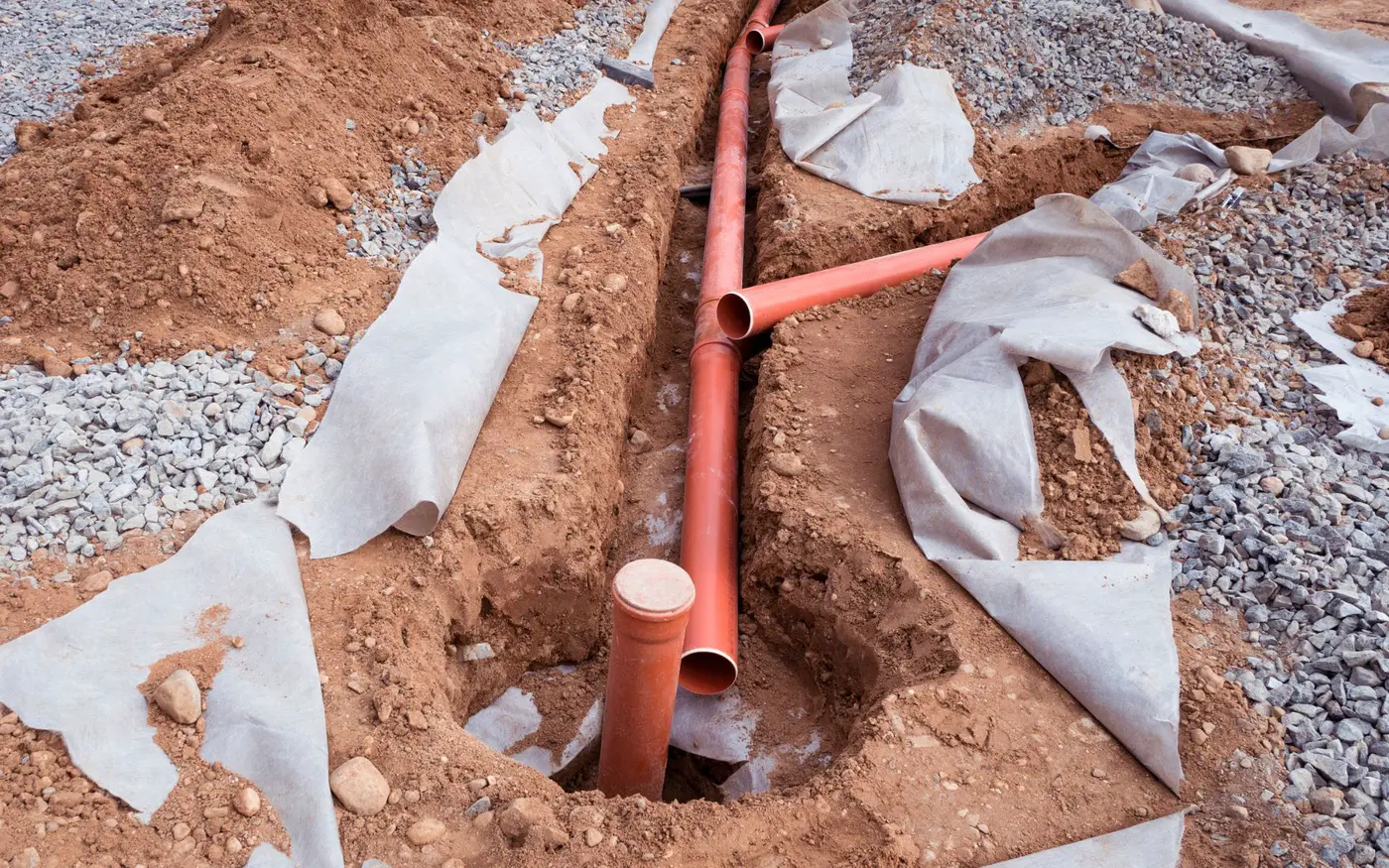
Where the soil itself is saturated, subsoil drains lower the water level in it. A perforated pipe sits in a trench filled with clean drainage metal and wrapped in filter cloth. Water in the surrounding soil moves into the metal and along the pipe. In clay the effect reaches only a few metres either side of each drain, so a wet lawn may need several lines, laid in a herringbone or parallel pattern at 3 to 6 metre spacing. The design and installation are covered in the subsoil drainage guide.
Step four: improve the soil
Drains remove free water, but the top 150 mm is where grass lives.
- Relieve compaction. Clay that has been driven over is ripped or deeply aerated before topsoil goes on.
- Add depth. At least 100 to 150 mm of good topsoil for lawn.
- Gypsum can help some sodic clays to crumble, though results on Auckland clays are mixed.
- Sand slitting, narrow sand-filled slots across a lawn, connects the surface to drains below.
- Plants. Wet corners suit rain gardens and moisture-loving natives better than lawn.
Do not mix a little sand into clay. Small amounts make it set harder.
Where the water can go
Every drain needs an outlet, and the options are limited by law.
- The public stormwater system, through a connection made by a registered drainlayer, usually with a building consent.
- The kerb, where the council permits a kerb outlet for that property.
- Soakage to ground, where the soil can take it. This works on the volcanic isthmus and in sand, and almost never in clay.
- A stream or open drain on the property, subject to rules on discharges and erosion.
Water cannot be piped onto a neighbour's land, and stormwater must never go into the wastewater sewer. Sites in a flood plain or crossed by an overland flow path have extra rules, because moving or blocking that water affects other properties. Check Auckland Council GeoMaps and confirm with the council.
Drainage around buildings and walls
Persistent damp under a house rots piles and bearers and makes the rooms above cold. Ground levels around the house are lowered or sloped away, a subsoil drain is laid along the uphill side, and subfloor vents are cleared. See subfloor repair costs. Behind a retaining wall, trapped water is the main cause of failure, so every wall on clay needs a drain coil and free-draining backfill.
What it costs
| Work | Guide price |
|---|---|
| Mini digger and operator for regrading | $850 to $1,200 per day |
| Subsoil drain, installed | $90 to $200 per metre |
| Driveway channel drain, installed | $180 to $450 per metre |
| Cart away surplus clay | $45 to $110 per m³ |
Guide prices for Auckland before GST, on a site with reasonable access. Only the written quote that follows a site visit is a firm figure.
A typical back lawn fix, with a day of regrading and 25 metres of subsoil drain, comes to $3,100 to $6,200 before topsoil, turf and the outlet connection. The service is on the site drainage page.
When to do it
Diagnose in winter, when you can see the water. Dig in late spring or summer, when clay is firm enough to trench cleanly and machines do not wreck the lawn. Drains installed in saturated ground smear the trench walls, which seals them and makes the drain less effective.
Common questions
How do I drain a boggy lawn on clay?
Reshape the surface so it has a steady fall, relieve compaction, add topsoil and, where the soil stays saturated, install subsoil drains at 3 to 6 metre spacing that run to an approved outlet.
Do soak pits work in Auckland clay?
Usually not. Clay cannot absorb water fast enough, so a soak pit fills and overflows. Soakage works on volcanic basalt and in sand, and is designed and tested for the site.
Can I connect a subsoil drain to my downpipe drain?
The connection to the stormwater system should be made by a registered drainlayer, usually through a silt trap so fines do not block the pipe. Never connect to the wastewater sewer.
Why did my lawn get wetter after the house was built?
Building compacts the clay, changes the slopes and often buries the topsoil. New roofs and paving also shed more water. Ripping the clay, regrading and re-topsoiling usually fix it.