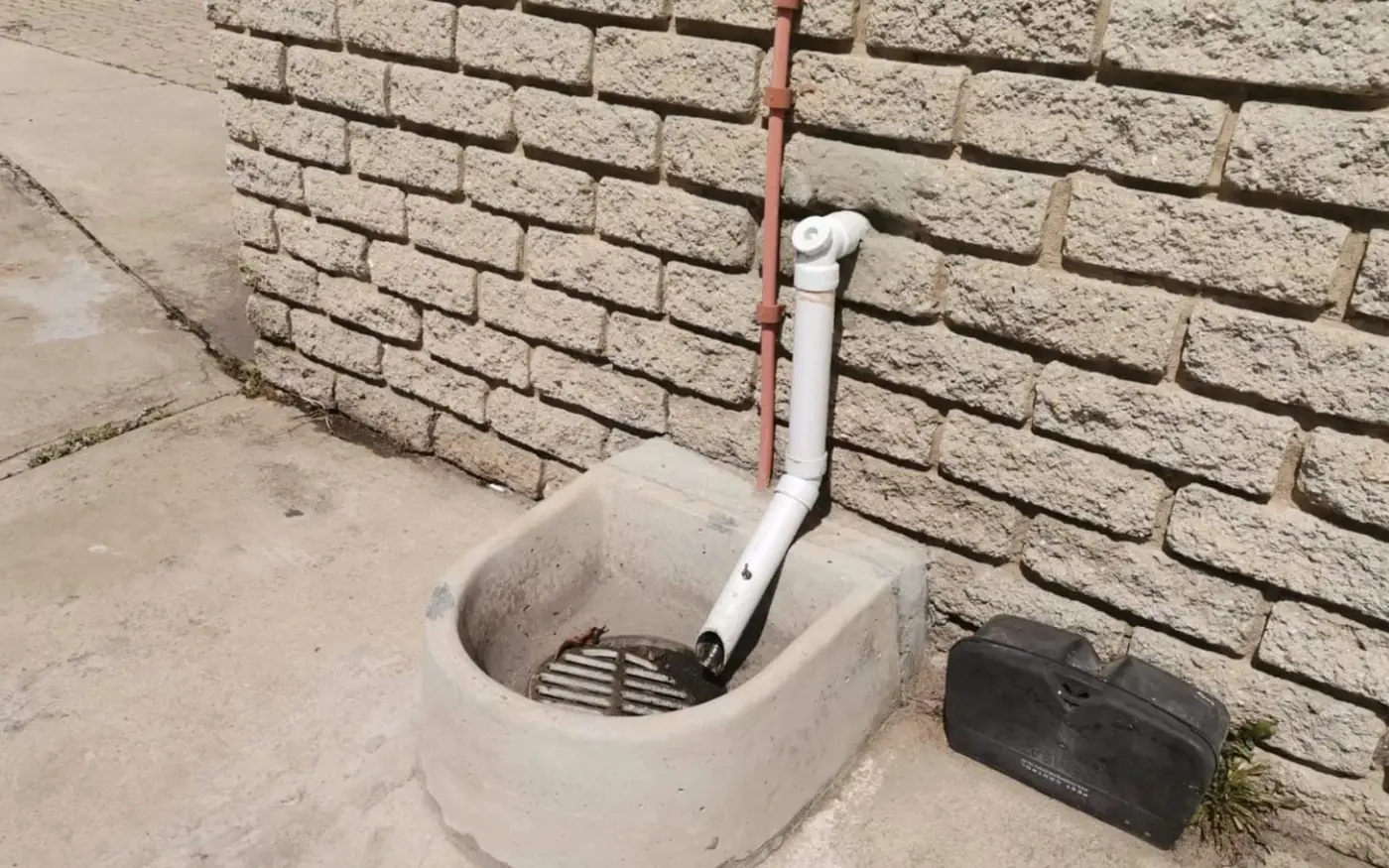
In short
- A gully trap is the open, water-sealed fitting outside where kitchen, laundry and bathroom waste pipes discharge.
- It is the overflow point: if the sewer blocks, sewage spills outside, not inside.
- Its rim must sit above the ground so stormwater cannot run in.
- Never bury, pave over or direct rainwater into a gully trap.
A gully trap is a bowl-shaped drainage fitting set in the ground beside a house. Waste pipes from sinks, basins, baths, showers and washing machines discharge into it, and it connects to the drain that runs to the sewer. A water seal in its bend stops sewer gas coming back up, and its open top gives a blocked sewer somewhere to overflow outside the building.
What a gully trap does
- Overflow relief. If the drain or the public sewer blocks, wastewater backs up. Because the gully trap is open and lower than the fixtures inside, the overflow comes out there, in the yard, and not through the shower or toilet.
- A barrier to sewer gas. The water held in the trap seals the drain, so smells and gases stay in the sewer.
- A collection point. Several waste pipes can discharge to one gully, above the water seal and below the grate.
- Access. It gives a drainlayer a way into the drain to clear blockages.
Toilets do not discharge into a gully trap. They connect directly to the drain through a soil pipe.
The rules in New Zealand
Gully traps are covered by the Building Code clause on foul water, G13. Its acceptable solution sets out how they are positioned. The main points are below. Your drainlayer and council will confirm the detail for your property.
| Requirement | Typical rule | Reason |
|---|---|---|
| Height above paving | Rim at least 25 mm above a paved surface | Keeps surface water out |
| Height above ground | Rim at least 100 mm above unpaved ground | Keeps surface water and soil out |
| Below the fixtures | Top of the gully at least 150 mm below the overflow level of the lowest fixture | Makes sure an overflow happens outside first |
| Grate | Fitted to stop debris, but must not prevent overflow | Keeps the drain clear |
| Stormwater | No roof or surface water to discharge into it | Sewers are not sized for rain |
| Position | Outside the building, with clear access | Overflow and maintenance |
Every house connected to a sewer needs at least one gully trap acting as the overflow relief gully.
Why stormwater must stay out
Wastewater sewers are sized for what comes out of houses, not for rain. When downpipes, yard drains or flooded ground feed water into gully traps, the sewer fills in a storm and overflows from manholes and from the lowest gully in the street, into streams and onto beaches. In Auckland, Watercare and the council actively look for these illegal connections. A gully set too low, so that a flooded path drains into it, is the same problem by accident. That is the reason for the height rules.
How earthworks and landscaping go wrong around gully traps
Gully traps are small and easy to overlook, and they are damaged or defeated by outdoor work more often than by anything else.
- Raising the ground. New paving, garden beds or lawn levels built up around the house leave the gully rim at or below the surface. Rainwater then runs in. The gully has to be raised by a drainlayer.
- Paving or building over it. A covered gully cannot overflow freely and cannot be reached. It must stay open to the air and accessible.
- Burying it in a garden. Mulch and soil wash in and block the trap.
- Driving over it. Standard gully dishes are not built for vehicles. In a driveway, a trafficable surround and grate are needed.
- Digging through the drain. The pipe from the gully runs shallow toward the sewer. It is often earthenware in older houses and breaks easily under a digger bucket.
- Lowering the house's surroundings. Digging down beside a house can leave the gully perched and its pipes exposed.
Before any digout, landscape earthworks or driveway work, find the gully traps and the line of the drain, and plan finished levels around them.
Common problems
It smells
The water seal has dried out or been siphoned away. This happens when a fixture has not been used for a while, as in a holiday home. Pouring a bucket of water in restores the seal. A persistent smell points to a cracked trap, a venting fault or a partial blockage.
It overflows
There is a blockage downstream. Fat, wipes and tree roots are the usual causes. Stop using water in the house and call a drainlayer. If neighbours' gullies are overflowing too, the public sewer is blocked: call Watercare in Auckland, or your council elsewhere.
It is full of debris
Lift the grate and clear leaves, soil and lint. Check the grate is in place and intact.
Water pools around it after rain
The surrounding ground or paving is too high or falls toward the gully. The surface needs regrading, or the gully needs raising. A channel drain or regraded surface should take stormwater to the stormwater system instead.
Who can work on a gully trap
Installing, moving, raising or replacing a gully trap is sanitary drainage, which is restricted to registered drainlayers and usually needs a building consent. Clearing debris from the top is ordinary maintenance for the owner. An earthworks contractor works around gully traps and their drains and brings in a drainlayer when one has to be altered. The property owner is responsible for the gully and the private drain up to the point where it joins the public sewer.
Gully traps, cesspits and sumps: not the same thing
People mix these up. A gully trap belongs to the wastewater system. A cesspit or catchpit is a stormwater sump with a grate, found in driveways and roads: see cesspits explained. The two systems are separate in New Zealand, and crossing them is unlawful. If you are unsure which a fitting is, look at what flows into it. Pipes from the kitchen or laundry mean a gully trap. A grate in a low point of paving that only sees rain is a stormwater sump. The difference between the systems is set out in sewage and sewerage.
Common questions
What is a gully trap?
An open, water-sealed fitting outside a house that receives waste water from sinks, showers and laundries and connects to the sewer drain. It blocks sewer gas and lets a blocked sewer overflow outside.
How high should a gully trap be above the ground?
The acceptable solution under Building Code clause G13 calls for the rim to be at least 25 mm above paved surfaces and 100 mm above unpaved ground. Confirm with your drainlayer.
Can I cover or pave over a gully trap?
No. It must stay open so it can overflow and be accessed. If paving levels are changing, a drainlayer raises the gully to suit.
Can a downpipe go into a gully trap?
No. Roof water and surface water must go to the stormwater system. Putting stormwater into the wastewater system is unlawful and causes sewer overflows.