In short
- Sewage is the wastewater itself. Sewerage is the system of pipes, pumps and plants that carries and treats it.
- In NZ both are now usually just called wastewater.
- Wastewater and stormwater are separate systems and must not be cross-connected.
- Owners are responsible for private drains up to the public connection.
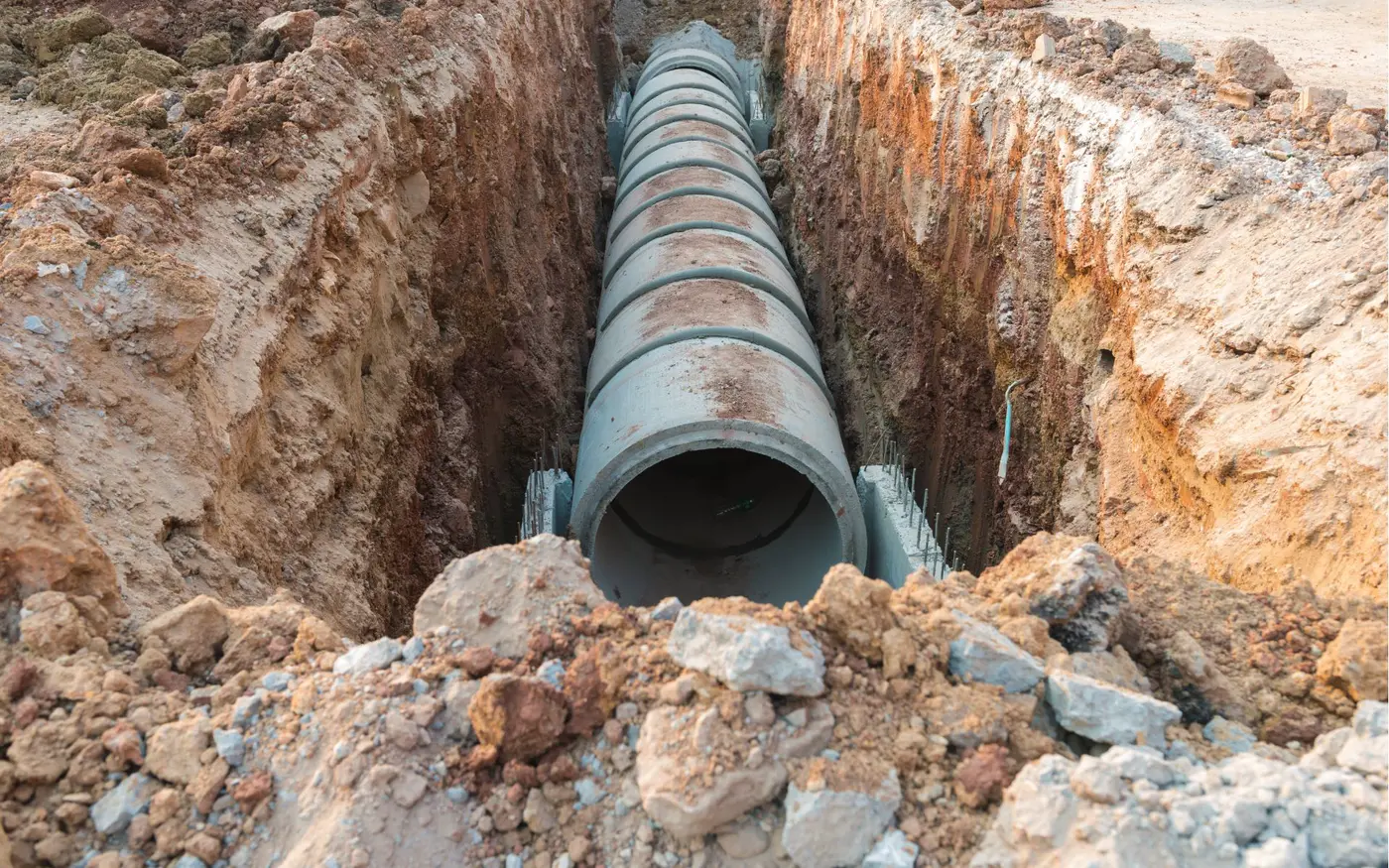
Sewage is the waste: the used water and what it carries from toilets, sinks, showers and laundries. Sewerage is the infrastructure: the drains, sewers, pump stations and treatment plants that take sewage away and treat it. One is the contents, the other is the container. In New Zealand, councils and water companies now mostly use the word wastewater for both.
The terms, side by side
| Term | Meaning | Example in a sentence |
|---|---|---|
| Sewage | Wastewater from homes and businesses | Raw sewage overflowed from the manhole. |
| Sewerage | The network that collects, carries and treats sewage | The suburb was connected to the sewerage system in the 1960s. |
| Sewer | A pipe that carries sewage, usually the public one | The house drain joins the sewer in the street. |
| Wastewater | The modern general term for sewage | Watercare operates Auckland's wastewater network. |
| Stormwater | Rainwater runoff from roofs, paving and land | Downpipes discharge to the stormwater drain. |
| Septic system | On-site treatment where there is no sewer | The lifestyle block has a septic tank and disposal field. |
An easy way to remember it: sewerage is the longer word and the bigger thing. It names the whole works, not the waste.
What is in sewage
Household wastewater is more than 99 percent water. The rest is human waste, food scraps, fats, soaps and detergents, plus whatever else goes down the drain. It is usually divided into blackwater, from toilets, and greywater, from showers, basins, laundries and kitchens. Trade waste from businesses is a third category with its own rules.
How a sewerage system works
- Fixtures and waste pipes inside the house carry water to the outside. Sinks, showers and laundries discharge to a gully trap. Toilets connect directly.
- The private drain runs underground across the section, usually 100 mm in diameter, laid to a steady fall.
- The connection joins the private drain to the public sewer, in the street or in a line running through back yards.
- Public sewers get larger as they collect more flow. Pump stations lift the flow where gravity runs out.
- The treatment plant screens, settles, biologically treats and disinfects the wastewater before it is discharged.
In Auckland the network is run by Watercare, and most of the city's wastewater is treated at large plants at Māngere and Rosedale.
Wastewater and stormwater are separate
New Zealand towns are built with two drainage systems.
| Wastewater (sewerage) | Stormwater | |
|---|---|---|
| Carries | Water from toilets, sinks, showers, laundries | Rain from roofs, driveways, roads |
| Goes to | A treatment plant | Streams and the sea, mostly untreated |
| Sized for | Household flows | Storm flows |
| In Auckland, run by | Watercare | Auckland Council |
Crossing them causes harm in both directions. Stormwater in the sewer overloads it, and diluted sewage overflows into streams and onto beaches. Sewage in the stormwater system goes straight to the nearest waterway. Both are unlawful. Some of the oldest parts of central Auckland still have combined sewers that carry both in one pipe, which is one reason for the large tunnel projects built to cut overflows there.
Where there is no sewerage
Much of rural Auckland, including large parts of Rodney, Franklin, the Waitākere Ranges and Waiheke, has no public sewer. Properties there treat their own wastewater in a septic tank or a more advanced treatment plant, and dispose of the treated water to a designed field on the property. These on-site systems are regulated by Auckland Council and need regular servicing. The disposal field has to be kept clear of buildings, driveways, heavy vehicles and fill.
Who is responsible for what
- The property owner owns and maintains the private drains, gully traps and any on-site system, up to the point of connection with the public network. On cross-leases and rear sections, a private drain may be shared between several owners.
- The network operator owns and maintains the public sewers.
The exact point where responsibility changes is shown on the drainage plans in the property file. If a drain blocks, a drainlayer with a camera can tell you which side of that point the blockage is on.
Why this matters before you dig
Any earthworks job can run into the sewerage system, in three ways.
- Private drains are shallow. Many are only 300 to 600 mm deep near the house, and older ones are brittle earthenware. A digout or trench that breaks one releases sewage and can create a void that later becomes a sink hole.
- Public sewers cross private land. In many Auckland suburbs the public line runs along the back or side of sections. Building, excavating or changing ground levels over or near it needs approval from Watercare. Manholes must stay accessible and at surface level.
- Septic fields are easy to wreck. A digger or truck driven over a disposal field crushes the pipes and compacts the soil so it stops working.
Before work starts, get the drainage plan from the property file, check Auckland Council GeoMaps for public pipes, lodge a beforeUdig request, and have the lines located on site. Where a drain has to be exposed, hydro excavation does it without breaking the pipe.
Who can do the work
Laying, altering or repairing sanitary drains is restricted to registered drainlayers and generally needs a building consent. New connections to the public network need the network operator's approval. An earthworks contractor digs and backfills trenches and works around existing drains, and brings in a drainlayer for the pipework. Related fittings are explained in the guides to gully traps and cesspits.
Common questions
What is the difference between sewage and sewerage?
Sewage is the wastewater itself. Sewerage is the system of drains, sewers, pump stations and treatment plants that carries and treats it.
Is it sewage pipe or sewerage pipe?
Either is understood. Strictly, a pipe carrying sewage is a sewer or sewage pipe, and it is part of the sewerage system. In NZ most people now say wastewater pipe.
Who is responsible for a blocked sewer drain?
The property owner, if the blockage is in the private drain. The network operator, Watercare in Auckland, if it is in the public sewer. A drainlayer's camera inspection shows which.
Can stormwater go into the sewer?
No. Wastewater and stormwater are separate systems in New Zealand, and connecting downpipes or yard drains to the sewer is unlawful because it causes overflows.